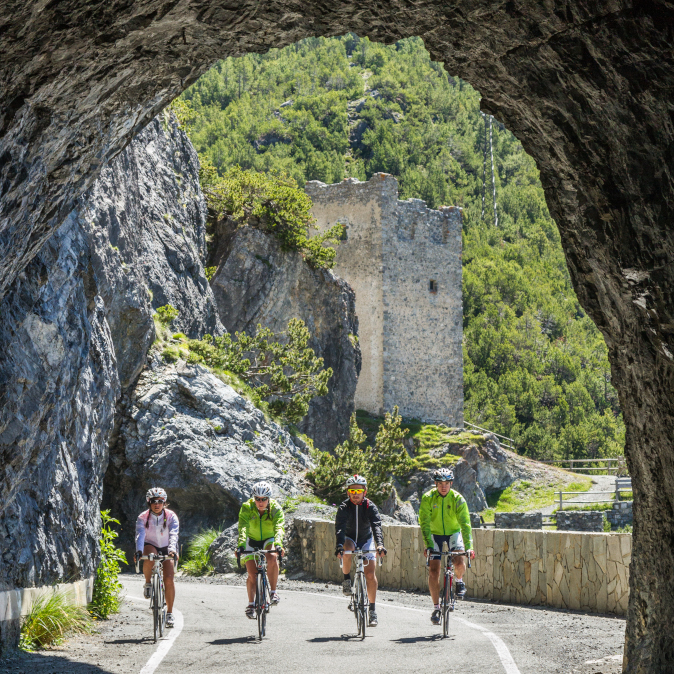
In the heart of the Alps, transit way in Europe between the North and the South, even since the Roman time Valtellina has played a remarkable role in different epoches
The first testimonies of the man presence date back to the Prehistory: the rocky inscription in Grosio and Teglio.
With the Roman emperor August the strategic importance of the passages across the alps raised, particularly through Valchiavenna, on the the Spluga Pass and the Settimo. The historical patrimony that still today testifies the wealth of this valley is endless. A holiday in Valtellina is enriched by visiting the museums, the churches and the noble palaces that in the past centuries made this land the main access gate to the Alps, obliged passage for the merchants coming from the rich Italian ports and going toward the most important cities of the Mittle Europa.
Since Middle age Valtellina played a strategic role among the Latin-Catholic world and the Germanic-Protestant world. The Longobards, the Franks, then Charlemagne, and under the influence of Como, that strengthened Valtellina and Valchiavenna’s ways of communication; the Visconti house and the Sforza house, crushed by the great powers of this time -France, Spain, Republic of Venice, Germany and Swizterland- which were all interested in the alpine passes.
Since 1512 Valtellina joined the Grison "Three Leagues". The Protestant government’s domination was not easy, according to the insurrections evidences of the seventeenth century. The valley knew a period of peace and autonomy till the nineteenth century. In 1815 the choice between Grigioni and Lombard-Venetian allowed the birth of the province of Sondrio annexed to the Habsburg territory. From now on the Valtellina’s history follows the Italian one, giving some great mens during the Renaissance as well being helpful to Garibaldi who, during the third war of Independence when he was at the head of the "Cacciatori delle Alpi", drove back the Austrians on the other side of the Stelvio.